
KENYA & TANZANIA: PRE TRIP INFO
KENYA & TANZANIA: PRE TRIP INFO
1. More Info About Your Kenya & Tanzania Trip
2. Getting Prepared
2.2 Cancellations / Trip Moves
2.8 Phone, Internet & WhatsApp
2.9 Arrival Info & Entry Requirements
2.12 Packing Guidelines / Checklist
3. During Your Tour
3.1 Trip Execution & Tour Leader
4. Readiness Checklist
1. More Info About Your Kenya & Tanzania Trip
1.1.1 FAST FACTS – KENYA
Population
- 58 Million.
- Capital city is Nairobi with approximately 5 million.
Geography
- 580,367 sq km (about 2.4 times bigger than the UK / roughly 6% the size of the US)
- It borders Ethiopia to the north, Somalia to the east, Tanzania to the south, Uganda to the west, and South Sudan to the northwest
- The country’s landscape varies from savannahs and highlands to the Great Rift Valley and snow-capped Mount Kenya, Africa’s second-highest peak.
- Kenya also has a coastline of about 536 km along the Indian Ocean.
Language
- Kenya has two official languages: English and Swahili (Kiswahili). English is primarily used in government, business, and education, while Swahili is widely spoken in daily life and serves as a unifying national language.
- In addition, there are more than 60 indigenous languages spoken across the country, including Kikuyu, Luhya, Luo, Kalenjin, and Kamba.
Currency
- Kenyan Shilling (KES) – abbreviated as KSh. USD is accepted in some tourist locations although local currency is preferred.
- 1 USD ≈ 130 KES (roughly)
- 1 GBP ≈ 165 KES (roughly)
Religion
- The majority of Kenyans are Christian (about 85% of the population), with both Protestant and Roman Catholic communities well represented.
- Approximately 11% of the population is Muslim, mainly along the coastal regions.
- Traditional African beliefs and other religions make up the remaining 4%.

1.1.2 FAST FACTS – TANZANIA
Population
- 67.5 Million
- Capital city is Dodoma, with around 2.2 million residents (although Dar es Salaam is the biggest city and still remains the commercial centre of the country).
Geography
- 947,303 sq km (about 4 times bigger than the UK / roughly 2% the size of the US).
- It is bordered by Kenya and Uganda to the north, Rwanda, Burundi, and the Democratic Republic of Congo to the west, Zambia, Malawi, and Mozambique to the south, and has a coastline along the Indian Ocean to the east.
- The country’s landscape includes the lowlands of the coastal plains, the Great Rift Valley, savannahs, lakes (Victoria, Tanganyika, Nyasa), and mountains, including Mount Kilimanjaro, Africa’s highest peak.
Language
- Swahili (Kiswahili) and English are the official languages. Similar to Kenya, Swahili is widely spoken across the country and serves as a unifying national language, while English is mainly used in government, education, and business.
- There are also over 120 indigenous languages spoken throughout Tanzania.
Currency
- Tanzanian Shilling – abbreviated as TSh. USD is accepted in some tourist locations although local currency is preferred.
- 1 USD ≈ 2,700 TSh (roughly)
1 GBP ≈ 3,300 TSh (roughly)
Religion
- Tanzania is religiously diverse: Christianity ~61% (mostly Protestant and Roman Catholic), Islam ~35% (mainly Sunni, concentrated along the coast), Indigenous and other beliefs ~4%

1.2 WHERE WE VISIT
Nairobi (2 nights)
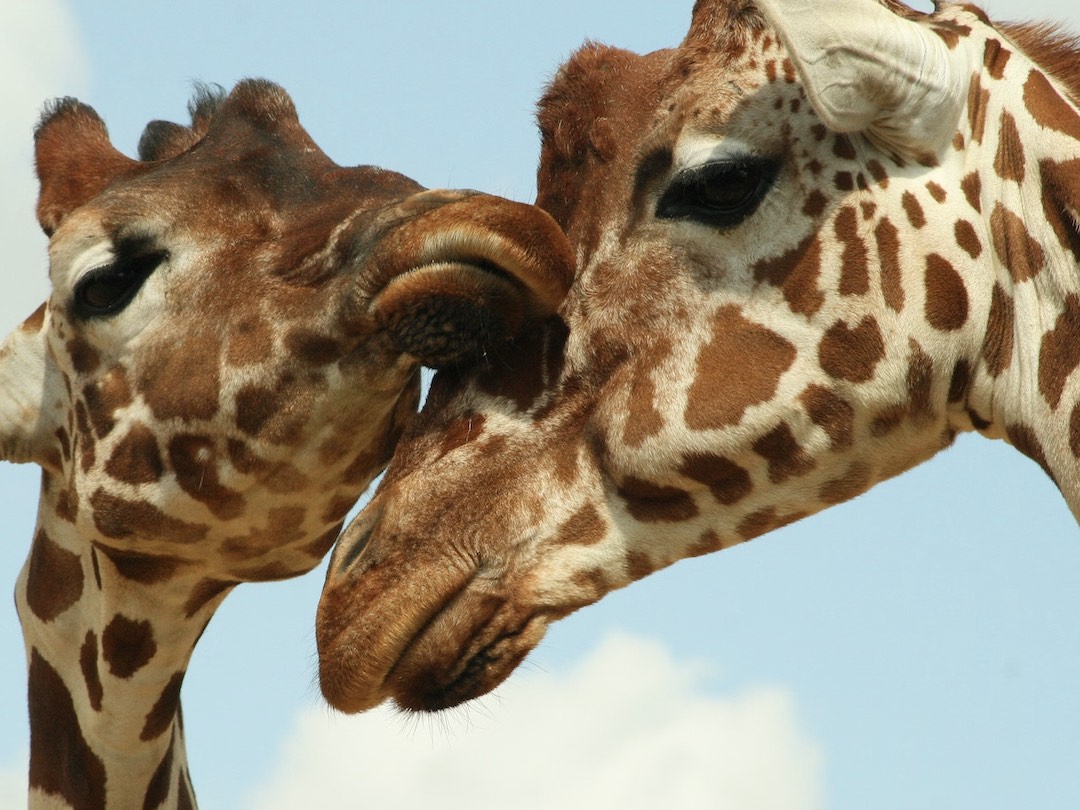
Nairobi is the vibrant capital of Kenya, a city full of life & contrasts. Once here, you’ll feel the buzz of busy streets, markets, and modern skyscrapers, yet also the calm of green spaces and encounters with wildlife. Highlights include feeding Rothschild giraffes at the Giraffe Centre and exploring Nairobi’s hidden stories with Nai Nami, a group of ex-street kids turned guides who will show you the city through their eyes.
Amboseli National Park (1 night)
Amboseli National Park is the complete contrast to Nairobi in that it feels like a vast, peaceful sanctuary beneath the shadow of Mount Kilimanjaro. We’ll drive across the park’s dusty landscapes, the best way to take in the raw natural beauty of this area. It’s elephant territory — you’ll likely see big tuskers moving through marshy grasslands, along with zebras, cheetahs and hippos going about their day.
Maasai Lodge – between Mount Meru and Mount Kilimanjaro (2 nights)
Maasai Lodge is a traditional-style lodge inspired by the Maasai culture, located in peaceful hills between Mount Meru and Mount Kilimanjaro. It offers thatched-roof accommodations, open landscapes, and a chance to experience daily life with the Maasai people. You’ll spend time with your Maasai hosts trying spear throwing, learning a few words of Maa, or joining a sunset dance, and hike the nearby Shira Plateau for sweeping mountain views and encounters with colobus monkeys and sunbirds.
Karatu (2 nights)
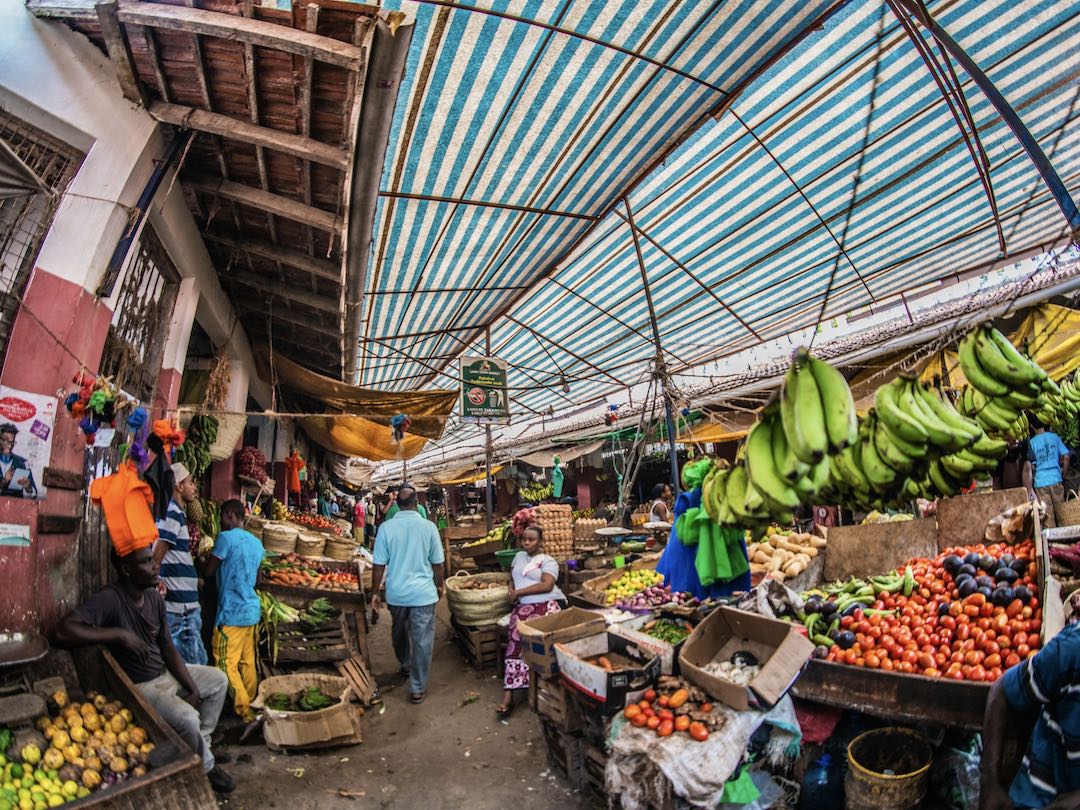
Karatu is a lush highland town surrounded by rolling hills and small farms, offering a peaceful change of pace after the mountains. It has a warm, low-key local feel, with nearby Mto Wa Mbu village adding a burst of colour through its lively produce markets, banana-beer stalls, and small workshops run by tailors, potters, and teachers. Exploring by bajaji—East Africa’s version of a tuk-tuk—gives you an authentic glimpse into everyday life here. Evenings are slow and cozy back at the lodge, where home-cooked dishes like ugali with beef stew or coconut veggies round off the day.
Serengeti (2 nights)
Because the wildebeest migration moves throughout the year, we don’t stay in just one fixed location. Instead, we adapt our route and accommodation depending on when you travel—ensuring you’re in the right place at the right time for the best wildlife viewing. For trips running from January to March, we stay in the Ndutu region in the southern Serengeti Ecosystem, where the migration gathers during calving season. At other times of year, we base ourselves in the Central Serengeti, which offers excellent year-round game viewing. Note: Ndutu itself sits within the Ngorongoro Conservation Area, just outside Serengeti National Park—but during this period, it’s widely considered one of the best locations in all of East Africa for wildlife sightings.
Arusha (1 night)
After returning from Lake Eyasi, we settle into Arusha for our final night in Tanzania. This vibrant gateway town sits at the foot of Mount Meru, surrounded by rolling hills and fertile farmland. It’s the perfect place to unwind after days of adventure—enjoy a relaxed evening at the lodge, organize your photos, or simply soak in the last views of the African landscape. With good food, calm surroundings, and that unmistakable safari atmosphere still in the air, Arusha is a gentle and fitting end to the journey.
SPECIAL NOTE ON LONG DRIVING DISTANCES:
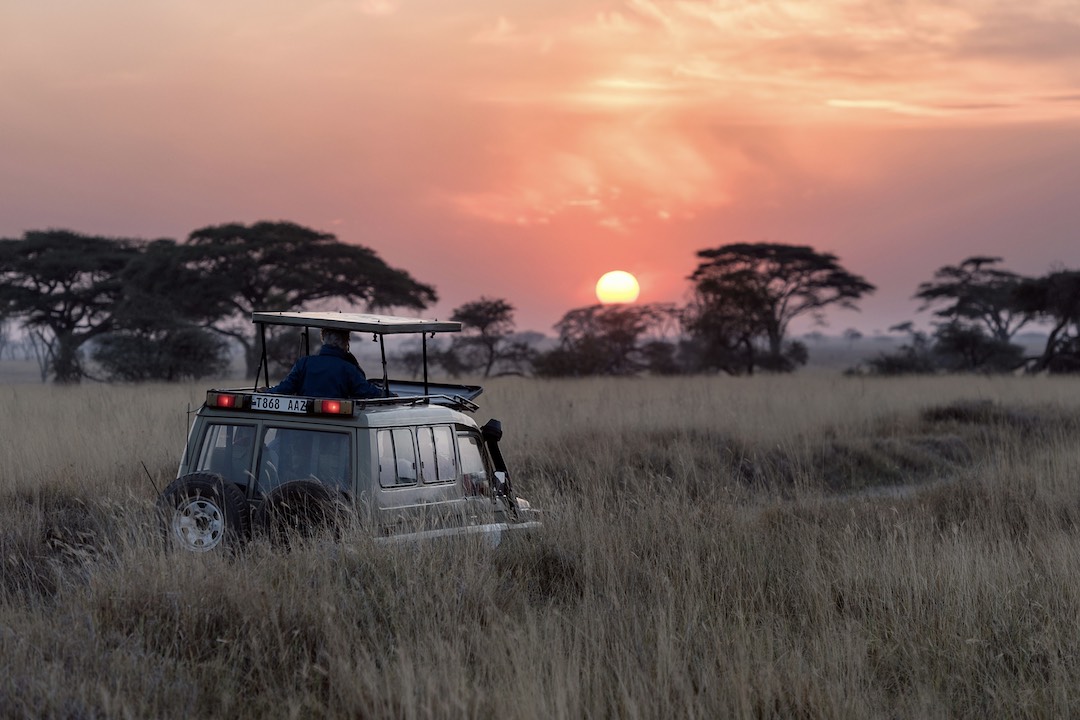
This trip is designed as an East African road trip—because we believe it’s the best way to truly experience this part of the world.
That does mean covering significant distances. Over the 11 days, we travel approximately 770 miles / 1,250 km between locations, with additional driving during activities such as game drives and city tours.
You’ll spend much of the trip in comfortable 4×4 vehicles, but many roads are unpaved, rocky, and bumpy—especially as we venture into more remote areas.
The upside? These journeys are all part of the experience. Many drives pass through national parks and incredible landscapes, often doubling as game-viewing opportunities, and this is something our past travellers have loved.
That said, it’s important you are comfortable with a trip that involves a fair amount of time on the road.
1.3 WEATHER
This trip covers a variety of landscapes in Kenya and Tanzania, from savannahs and national parks to highland areas. Temperatures vary depending on altitude and location, but overall it is expected to be warm and mostly sunny. We have shown below the weather specifically in Nairobi, Kenya, which is a good reference point for how the weather is expected to be throughout the trip.
You’ll notice that the temperature drops significantly at night, therefore, it’s important to bring some warmer clothing along for this.
Likewise, it’s worth having a rain jacket for the infrequent rainfall.
Nairobi Weather – Celcius

Nairobi Weather – Fahrenheit

1.4 ITINERARY OVERVIEW
A summary version of the itinerary. You can find the more detailed version here.
| Day | Where We Stay | Activities |
| 1 | Nairobi | Arrival + Welcome Dinner |
| 2 | Nairobi | Giraffe Centre + Nai Nami Nairobi Tour |
| 3 | Amboseli | Travel to Amboseli National Park + Afternoon Game Drive |
| 4 | Maasai Lodge | Travel to Maasai Lodge (Tanzania) + Afternoon Cultural Activities |
| 5 | Maasai Lodge | Shira Plateau Day Hike |
| 6 | Karatu | Travel to Karatu + Explore Mto Wa Mbu Village |
| 7 | Serengeti | Travel to Serengeti + Afternoon Game Drive |
| 8 | Serengeti | Full Day Serengeti Game Drive |
| 9 | Karatu | Travel to Ngorongoro Conservation Area + Crater Game Drive |
| 10 | Arusha | Travel to Lake Eyasi + Meet Hadzabe Tribe + Travel to Arusha |
| 11 | Arusha | Departure |
A detailed hour-by-hour schedule will be provided 10 days before the trip.
Some special notes to add about the itinerary:-
1. The Nai Nami tour in Nairobi is led by former street children who openly share their experiences of growing up homeless. Some of the stories can be quite shocking and unlike anything you may have heard before, so we want to set expectations in advance. However, it is also a powerful and insightful experience that offers a deeper understanding of life in Kenya which is why we choose to include it.
2. Due to the nature of this trip, we use 4×4 vehicles with a maximum of 6 passengers, so groups are usually split across 2–3 vehicles. We don’t have a fixed policy on seating arrangements—whether guests stay in the same vehicle or rotate is decided by the group and tour leader, as each approach has its pros and cons. If passengers do stay in the same vehicle, we encourage mixing with other guests at lunches and dinners to help you get to know the wider group.
3. On Day 4 we will cross the border between Kenya and Tanzania at the Namanga road border crossing. This requires you to pass through immigration and for this you will need a paper copy of your Tanzania visa. Here we will also switch cars and drivers/local guides from our Kenya team to our Tanzania team (the Tour Leader will be the same throughout the trip).
4. On Day 5, we’ll do the Shira Plateau Day Hike, but there is also an option to skip it and spend the day at the lodge instead, where other activities are available. Some guests choose this as a chance to rest and recharge during a fairly intense itinerary.
5. Depending on time of year you will either stay in Ndutu or Central Serengeti on days 7 & 8. We stay in the locations we believe has the best opportunity for wildlife spotting at that time of the year. (Ndutu – Jan-March, Central Serengeti – rest of year).
6. On Day 8, there is the option to take a hot air balloon safari over the Serengeti. This is an optional activity and not included in the standard itinerary, but we’re happy to arrange it for you with our trusted local partners. The experience typically costs between $550–$600 USD per person. If you’re interested, simply let your Tour Leader know at the start of the trip and we’ll help coordinate.
7. The overall itinerary is fairly packed in order to help you see as much of East Africa as possible. This can mean arriving at hotels in the late afternoon or early evening, leaving limited time to use facilities such as swimming pools. This is a deliberate trade-off in the itinerary design to maximise your time exploring.
1.5 INCLUDED/EXCLUDED
Included:-
- 11-days / 10-nights: 2 Nairobi, 1 Amboseli, 2 Maasai Lodge (Tanzania), 2 Karatu, 2 Serengeti, 1 Arusha
- Accommodation in hand-picked 3 & 4-star hotels/lodges (based on sharing twin room)
- Meals – All breakfasts, all lunches & all dinners
- Airport pickups and drop-offs
- All transportation & activities within itinerary
- A trip host plus various local experts
Excluded:-
- International flights to get you to Kenya and from Tanzania
- Kenya + Tanzania visas
- Alcoholic drinks
- Water & soft drinks (outside of those provided with meals)
- Additional meals (outside of those explicitly stated as included)
- Optional activities during free time
- Tips (for Tour Leaders, local guides, bus drivers etc…)
- Travel insurance
1.6 HOTELS
As standard, we use the hotels listed at the bottom of our itinerary page.
From time to time we may need to change a specific hotel if for example it’s not available on those given dates. But in such situations, we will always replace with another hotel at the same quality.
Some special notes regarding hotels:-
- Hotel check-in is not until 3pm. Sometimes earlier check-in is possible, however, it won’t be possible to know in advance because it will depend on hotel availability that day (and what time other hotel guests check-out). The only way to guarantee an early check-in is if you’re willing to pay for the hotel from the night before.
- You will be sharing a twin room with a fellow traveler of the same gender, unless you specifically paid extra for a private room (these are dependent on availability, see prices in FAQ section of itinerary page).
- If you are planning to tag on extra days on either side of the trip, we can help book you into our hotels. We can only guarantee this if you let us know more than 70 days before the trip and we can only do this for a maximum of 2 nights on either side. Any longer and we recommend you book directly with the hotels.
- Most of the hotels are in the middle of nature so it is not uncommon to find various animals and insects around. This is part of visiting remote Africa.
- In the Serengeti, you’ll stay in a basic tented camp set in the heart of the plains, with no fences separating it from wildlife. Animals may occasionally move through the camp, especially at night, so it’s essential to follow the safety rules provided on arrival, including not walking alone after dark, keeping tents zipped, and not leaving food inside. A full safety briefing will be given when you arrive—please make sure to follow it carefully!
1.7 ROOM SHARING
As standard, the default on all of our trips is that you will share a room with another traveler. These will be twin rooms, with 2 separate beds, and shared by a max of 2 people.
You will always share with another traveler of the same gender, and we will typically pair you with someone around the same age. You will share with this person for the duration of the itinerary.
Note that we operate this way because – by splitting the room cost between two people – it allows us to keep the overall OWR trip price down.
It is however possible for you to pay extra for a private room if you prefer. Prices for this are shown in the FAQ section of the itinerary page. We hold a limited number of private rooms and these will be allocated on a first come, first served basis (therefore please check in with us for availability).
In our experience, most people are happy sharing a twin room and it typically works out well.
Some Important Things to Consider:-
SNORING
If you snore, then we highly recommend that you book a private room. While we understand that this will cost you more, it is important to think of the negative impact/experience the snoring could have on any potential roommate.
LIGHT SLEEPERS
Likewise, if you consider yourself to be a light sleeper and are easily woken by the sounds or movements or others, then we also recommend you also consider booking a private room in order to get the most out of the experience.
In addition…
If you would like to book a private room then it is much better to do this in advance of the trip! If you originally signed up for a shared room and then request to move to a private room during the trip, it will be much more challenging because:-
- We cannot guarantee that there will still be rooms available (since we will have released our OWR allocation by then).
- Our quoted OWR rates will no longer apply (it will be whatever last-minute rates the hotels provide).
Therefore, it is much better for you if you can make this decision ahead of time!
2. Getting Prepared
2.1 TRIP COUNTDOWN TIMELINE
This is what you should expect in the lead up to your trip.
- Book trip (secure your spot with a deposit)
- Book international flights (these can be booked at any point after we’ve confirmed your spot – don’t leave too late as price will go up closer to trip)
- Purchase travel insurance (this will cover for issues leading up to trip as well as during)
> 70 Days Before Trip (cancellation penalties kick-in beyond this point)
- Full balance must be paid
- OWR sends survey: requests flight information, dietary requirements, health conditions, emergency contacts etc…(must be returned within 7 days)
> 10 Days Before Trip
- OWR sends day-by-day schedule, optional activity recommendations & some final info to prepare you for trip
> 3 Days Before Trip
- WhatsApp group created with all trip attendees + Tour Leader
> Trip Start Date
- Welcome meeting is typically scheduled for 6pm on first day. This is where you will meet your Tour Leader and other guests (note – we may change this time depending on overall group arrival times. If it changes we will notify you).

2.2 CANCELLATIONS / TRIP MOVES
The £200/$250 deposit is non-refundable. However, if you need to cancel at any point, you can put this towards any future trip you book with us (in any location).
The rest of the balance is refundable up until 70 days before the trip. From that point the following cancellation terms will apply:-
> 30-70 days before trip – 50% refund
> 0–30 days before trip – 0% refund
Important Note – it is not possible for us to make exceptions to these terms since from the 70 days mark we will commit payments to our local suppliers in Kenya and Tanzania and will be bound by their strict cancellation terms. This is why it’s very important for you take take out a travel insurance policy which includes trip cancellation (from the point of booking the trip).
This applies also to requests to change to an alternative future OWR trip, when such requests are made within 70 days of your scheduled trip departure.
2.3.1 VISA REQUIREMENTS
Please follow this guide to help with your visa applications.
UK Citizens
- Kenya – you must obtain an Electronic Travel Authorisation (ETA) before arrival. You must apply at least 72 hrs before (ideally much further out) and it will cost US$30. You can apply at the link below:-
- Tanzania – you must obtain an eVisa online before arrival. You must apply at least 15 days before although it is recommended to do much further in advance. It will cost US$50 and you must apply for a single-entry visa. You can apply at the following link:-
https://visa.immigration.go.tz/
US Citizens
- Kenya – you must obtain an Electronic Travel Authorisation (ETA) before arrival. You must apply at least 72 hrs before (ideally much further out) and it will cost US$30. You can apply at the link below:-
- Tanzania – you must obtain an eVisa onlinebefore arrival. You must apply at least 15 days before although it is recommended to do much further in advance. It will cost US$100 and you must apply for a multi entry visa. You can apply at the following link:-
https://visa.immigration.go.tz/
If you are from a different country, please check the requirements specific to your country.
IT IS ESSENTIAL THAT YOU HAVE A PAPER COPY OF YOUR TANZANIA VISA, THIS WILL BE REQUESTED BY CUSTOMS OFFICIALS WHEN CROSSING THE BORDER INTO TANZANIA. THEY DO NOT ALWAYS ACCEPT ELECTRONIC COPIES.
2.3.2 PASSPORT
To enter Kenya and Tanzania, your passport must meet the following conditions:-
- Be valid for at least 6 months from the date you arrive
- Have at least 2 blank pages and no damage.
- (entry can be refused if you do not meet these conditions)
2.4 VACCINATIONS
At the links below, we have shared the official vaccine recommendations from the US and UK governments (if you are from a different country please check the equivalent from your country).
Some very important points to note:-
1. Generally vaccines are recommendations, each individual has to assess the risks and make their own personal decision on which vaccines to get. We highly recommend that you consult with your doctor or local travel clinic for advice on this topic.
2. When crossing the border between Kenya and Tanzania, you will be required to show proof of yellow fever vaccination. This is because Kenya is considered a country at risk of yellow fever transmission.
3. Malaria medication is generally recommended for most of the places we visit in Kenya and Tanzania. It is important you assess and take necessary precautions.
Kenya
US:
https://wwwnc.cdc.gov/travel/destinations/traveler/none/kenya
UK:
https://travelhealthpro.org.uk/country/117/kenya#Vaccine_Recommendations
Tanzania
US:
https://wwwnc.cdc.gov/travel/destinations/traveler/none/tanzania
UK:
https://travelhealthpro.org.uk/country/220/tanzania#Vaccine_Recommendations
Please read through these and compare with your current vaccination status (it is your responsibility to ensure you are adequately vaccinated).
2.5 TRAVEL INSURANCE
It is mandatory that all guests have travel insurance in place prior to joining our trips.
Some important info relating to this:-
- You must have travel insurance in place to join the trip. No exceptions.
- We will ask you to provide your policy number and 24hr emergency contact number (this will be part of the OWR survey 70 days pre trip).
- At a minimum it must cover the mandatory elements mentioned in our booking terms (personal accident, death, medical expenses and emergency repatriation).
- However, we strongly recommend you also include the “trip cancellation” coverage. This will cover you for things that can happen between booking the trip and the trip actually starting. Examples are: changes to your personal circumstances, destinations becoming unsafe to travel, flight issues stopping you from joining the tour etc…
- We recommend that you start your coverage from the point of booking the tour.
- It is your responsibility to ensure your policy covers all of the activities specified on the trip itinerary, in addition to any optional activities you plan to do.
There are numerous policies on the market and you should choose whichever is most appropriate for you. Here’s a small selection to consider:-
2.6 LUGGAGE
- We ask you to restrict your luggage to one standard piece weighing no more than 20kg/45lbs.
- A soft sided duffel bag is highly recommended for this trip as it’s easier to fit into the 4×4 vehicles. Hard case luggage is challenging and can also get damaged due to the bumpy roads.
- It’s worth considering whether you could do the trip with cabin luggage only – this would mitigate any risk of lost luggage by the airlines on your international flights (which is not frequent but does happen from time-to-time).
2.7 LOCAL CURRENCY
Currency on this trip is a little challenging due to two countries being involved and Tanzanian being a closed currency.
Kenya uses the Kenyan Shilling (KSh / KES) and it is possible to exchange some of this before coming (but remember we only spend 3 days in Kenya).
Tanzania uses the Tanzanian Shilling (TSh / TZS) but this is more difficult to get overseas and is easier obtained within the country.
You can use your credit/debit cards at all the lodges although they will typically add a 5% local surcharge on top.
And US Dollar is accepted in most places (both countries) but local currency tends to be easier/more welcomed.
So what do we suggest?
You won’t need much spending money since almost everything is included, mainly just for drinks and souvenirs (tipping also, but we will introduce a tipping kitty for that).
It is worth having a little Kenyan Shilling which you can either get before coming or you can get at an ATM/currency exchange within Kenya.
And then when we cross the border into Tanzania, there is a currency exchange there where you can get Tanzanian Shilling. Here you can either convert your left over Kenyan, or use US Dollars, Euro or Pounds (it’s best to have cash for this vs card).
The amounts you take will depend on how much you expect to spend on drinks and souvenirs.
2.8 PHONE, INTERNET & WHATSAPP
In most locations there is good phone signal and internet access and WIFI is available in hotels & restaurants.
Check out the plan of your phone provider to understand if data roaming is included as part of your package. If not, it is very easy to buy an e-sim, in which case we recommend Holafly or Airalo services.
Alternatively, it is possible to buy a local prepay sim upon arrival into the airport in Nairobi. This will cost around £10/$15.
We will use WhatsApp as a means of communicating with the group while on tour and recommend you download this to your phone if you don’t already have it.
2.9 ARRIVAL INFO & ENTRY REQUIREMENTS
Our trip starts in Nairobi so you should fly into Jomo Kenyatta International Airport (NBO).
Ideally you should arrive at the hotel by 6pm on the first day. This is when we have our welcome meeting and afterwards go for dinner (although if you arrive later it’s fine to catch up).
There will be someone there to meet you upon arrival as you walk through the gates (they will have a sign with your name on it).
Hotel check-in is not until 3 pm but if arriving earlier you can drop off your bags and go explore the surrounding area.
Please ensure that you have read all of the Kenya and Tanzania entry requirements (it is your responsibility to ensure you comply):-
US Citizens
UK Citizens
(if from a different country, please check those requirements specific to your home country)
When going through passport control in Kenya you may be asked to show the following:-
- Passport (should be valid for at least 6 months from the date you arrive)
- Evidence of return flight leaving Tanzania
- Kenya hotel name and address: Sarova Panafric Nairobi, Kenyatta Ave, Nairobi, Kenya
Please have this information on hand.
2.10 DEPARTURE INFO
Our trip ends in Arusha, where the closest airport is Kilimanjaro International Airport (JRO). We will arrange your airport transfer according to your flight time.
You can leave at any time on the last day. There are no activities scheduled for that day.
2.11 AIRPORT TRANSFERS
Airport transfers are included at both the start and end of the trip.
The following conditions apply:-
- We only do transfers between airports and our selected hotels. No other locations (other hotels, Airbnbs etc…)
- For those tagging on extra days, we will endeavour to include transfers up to 2 days outside of official tour dates. Beyond this we will not include transfers.
2.12 PACKING GUIDELINES / CHECKLIST
Below are some rough guidelines, leaving space for you to decide the specific items you would like to bring.
Clothing
- Lightweight, neutral-colored clothing: Pack breathable, lightweight fabrics like cotton or linen to stay comfortable in the African heat. Opt for neutral colors such as khaki, tan, or olive green to blend in with the environment and minimize disturbances to wildlife -> Also, it is highly recommended NOT to wear black or dark blue clothing while on an African safari as these attract Tsetse flies which have a painful bite.
- Long-sleeved shirts and trousers: Protect yourself from the sun, insects, and thorny vegetation by packing lightweight, long-sleeved clothes. They also offer an additional layer of protection in the cooler mornings and evenings.
- Sweater or jacket: Although the days may be hot, nights and early mornings can be chilly, particularly in certain regions. Pack a warm sweater or jacket to keep you comfortable in these cooler periods.
- Swimwear: Some safari lodges and camps offer swimming pools or water-based activities. Don’t forget to pack your swimwear for a refreshing dip or some relaxation at the lodge.
Footwear
- Sturdy, closed-toe walking shoes: Invest in comfortable, closed-toe shoes with good traction for walking safari and game drives. Choose footwear that provides support and protection against uneven terrain and potential encounters with thorns or insects.
- Lightweight sandals or flip-flops: Pack a pair of comfortable, lightweight sandals or flip-flops for relaxing at the lodge or camp after a day of exploration.
- Socks: Bring a few pairs of moisture-wicking socks to keep your feet comfortable and protected inside your shoes.
Accessories
You could also consider some of the following:-
- Wide-brimmed hat or cap: Shield yourself from the sun’s rays during game drives and walks by wearing a wide-brimmed hat or a cap with a neck flap.
- Sunglasses: Protect your eyes from the intense sunlight and glare, giving you clear vision during your safari adventures.
- Bandana or scarf: A versatile accessory that can be used to protect your face from dust, cover your head, or serve as an impromptu accessory.
- Binoculars: Enhance your wildlife viewing experience by bringing a good pair of binoculars. They allow you to observe animals and birds in greater detail, even at a distance.
- Camera equipment: Capture the thrilling moments and breathtaking landscapes with a high-quality camera. Don’t forget your additional lenses, spare batteries, memory cards, or whatever else you need for your camera.
- Power bank: Safaris often take you into remote areas with limited access to electricity. Carry a reliable power bank to ensure your important electronic devices stay charged.
- Waterproof backpack or daypack: Choose a waterproof backpack or daypack with sufficient space to carry your essentials such as water, sunscreen, camera gear, and personal items.
Other
- Power adapters (to convert to local supply) – see here
- Sunscreen
- Mosquito/bug spray
- Ear Plugs (if sensitive sleeper)
- Personal entertainment (books, podcasts etc… for travel time)
- Toiletries
- Personal Medication
- Travel sickness pills (if you tend to get travel sick this will be especially important given the bumpy roads)
- Note – we will provide you a refillable water bottle at the start of the trip
Documents
- Flight info (important to be able to show you have a flight leaving Tanzania)
- Travel Insurance info (especially your policy number & 24hr emergency number)
- Passport
- Supporting documentation for medications – see advice here
- Visas (see section 2.3.1)
- Yellow fever vaccination certificate
NOTE – Don’t bring unnecessary plastic: Kenya and Tanzania have totally banned plastic bags and won’t allow you to bring them into the country. Be a responsible traveler and support efforts to reduce pollution by leaving plastic bags at home.

3. During Tour
3.1 TRIP EXECUTION & TOUR LEADER
You Tour Leader is responsible for leading the group throughout the trip, they will be there from the welcome meeting at the start until the last morning when the trip ends. We will connect you with your Tour Leader – via WhatsApp – in the days leading up to the trip.
They will be your first point of contact for any issues during the trip but you can also contact us at [email protected]
3.2 FREE TIME
At various points during the trip the trip schedule will show ‘Downtime’ and ‘Free Time’
Downtime is where there are a couple of hours or so free between activities. There is probably enough time to go for a coffee, relax or go for a wander but not quite enough time to go do another activity.
Free Time is where there is a sizeable chunk of time available – half day or full day – where you could feasibly go off and do another activity (outside of the OWR itinerary). It is there to give you flexibility to go do your own thing and explore your own interests.
We will provide recommendations of possible activities for you to do during Free Time (we will send this 10 days before the trip).
We don’t recommend booking anything prior to arriving in Kenya as typically most things can be arranged at short notice and often our guests decide to do things with other people in the group.
3.3 SCHEDULE CHANGES
While we endeavour to operate all trips as described in the published itineraries we always reserve the right to change the trip itinerary.
Changes may be necessary as a result of unforeseen circumstances, operational concerns, concerns for your health, safety, enjoyment or comfort.
Any changes are at the discretion of OWR.
This includes the right to replace Tour Leaders, alter accommodations, change transport, modify the order in which places are to visited, and make any other changes to the itinerary.
We will inform you of any such changes as soon as reasonably possible.
3.4 BEHAVIOUR ON TOUR
We request that all guests take responsibility for their personal behaviour on the tour, specifically to:-
- Respect the decisions of the Tour Leader (and raise concerns respectfully)
- Show respect and consideration for the other members of the group
- Drink alcohol responsibly
- In addition we have an absolutely zero tolerance no drugs policy.
- Be on time to start activities as per the schedule (be respectful of the time of other members of the group)
We also ask that you read about our OWR Trip Style prior to joining the trip.
3.5 SAFETY ADVICE
In general Kenya and Tanzania are safe countries to travel.
Millions of foreigners visit every year and the vast majority of those are trouble free.
However, we do recommend taking some extra precautions and being more vigilant than you typically would in your home country.
- Leave jewellery / expensive handbags etc… at home
- Don’t go wandering outside the tourist areas without a local
- Don’t flag taxis – get the hotel / restaurant to call them
- Use ATMs inside banks / shopping malls rather than on the street
- Keep only small amounts of cash on you when out and about
- Drink alcohol moderately, avoid making yourself vulnerable (and don’t leave drinks unattended)
- Avoid walking alone at night
- Don’t go off to party with people you’ve just met!
We also strongly recommend reading the travel advice provided by your government / consulate / foreign office.
Note – if arriving into Nairobi in advance of the OWR tour starting and you plan to explore, we recommend not walking around the city alone. It is much better and safer to use a taxi, private driver or to book yourself onto a tour.
23.6 SPENDING MONEY
We include include just about everything on the tour.
The itinerary was designed so that while you’re in Kenya and Tanzania all you need to do is focus on enjoying yourself.
With that said you will likely need a little spending money which we estimate as follows:
- $250 – $400 (US)
- £200 – £300 (UK)
(for other currencies please convert)
These estimates factor in; snacks, alcoholic drinks, and souvenirs.
We also recommend you have access to additional funds in case of emergency.
Important Notes:-
– We have received feedback from past guests that they would prefer us to create a tipping kitty for this tour. We will send details of this in the lead up to the tour.
– if you plan to do the Hot Air Balloon ride on Day 8, this is likely to cost an additional US$550-$600. You can pay for this on debit/credit card while in Tanzania.
3.7 TIPPING
There is a very strong tipping culture in East Africa and so it’s widely expected by the locals that they will be tipped for their efforts – this especially relates to drivers, tour guides and lodge staff. Our past guests have advised us that they would prefer we collect a tipping kitty at the start of the tour so that the Tour Leader can distribute the tips throughout the tour, rather than guests having to remember and have the correct local currencies at hand each day. In the lead up to the tour we will therefore send you details about this kitty.
Note that the tipping is always optional and if you prefer to manage yourself rather than join the kitty, that is absolutely fine. We do this simply to make the process easier for everyone.
3.8 LAUNDRY
We know that some travellers prefer to pack light and do laundry while on tour. Laundry services are available throughout Kenya and Tanzania, especially in safari lodges and camps. Due to limited time at some lodges, the best place to do this is normally at the Maasai Lodge on Day 4. Prices are generally reasonable, and your Tour Leader can help coordinate.
3.9 POST TRIP
We will send you a survey asking for feedback on your experience.
If you enjoyed the tour we would love it if you could recommend us on Google and/or Facebook.
We also have some special offers to those on our trips:
- If you book a new trip within 2 weeks of your current trip ending, you get a £200 / $250 discount.
- If you book a new trip after this point, we still offer a £100 / $125 discount.

4. Readiness Checklist
We know this is a lot of information to digest, therefore, here’s a quick checklist to ensure you’re ready for your upcoming trip.
Have you:-
- Purchased your international flights to Kenya and from Tanzania?
- Purchased travel insurance? (and made sure it covers all activities)
- Paid your full balance with OWR?
- Checked your passport validity? (at least 6 months from the date you arrive + 2 blank pages with no damage)
- Checked that you have the recommended vaccines? Especially Yellow Fever and Anti-Malaria tablets
- Obtained visas? And printed a paper copy of the Tanzania visa
- Completed the OWR survey (will be sent 70 days before the trip)
- Checked our packing guidelines?
- Set up your data roaming + downloaded WhatsApp?
- Made plans for how you will access cash in Kenya and Tanzania for tips etc…
- Read our OWR Trip Style document to ensure you are comfortable with what to expect?
If so – you are good to go!
